The Middleman Is Disappearing From Indian Craft — And Artisans Are Finally Keeping the Difference
Digital platforms are letting weavers and craftspeople sell directly to global customers for the first time. The margins that used to disappear between the loom and the shop are starting to land where they should.
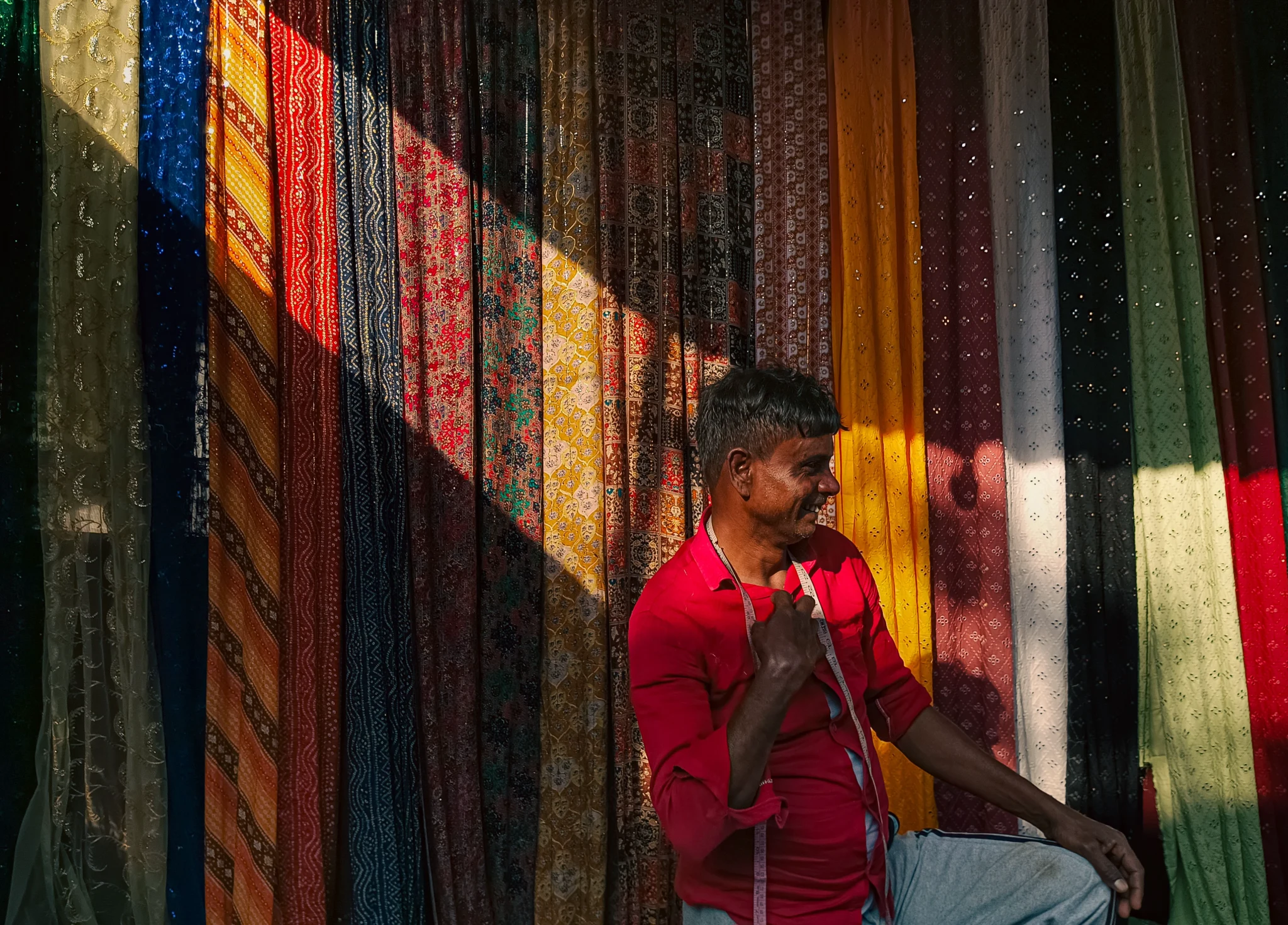
For most of the modern history of Indian handicrafts, the artisan making a piece and the customer buying it were separated by a long chain of hands — a local trader, a regional aggregator, a wholesaler, an exporter, a retailer — each taking a cut before the product reached a shelf anywhere from Jaipur to Los Angeles. The person who actually made the thing typically captured the smallest share of what it eventually sold for. Digital commerce is the first serious challenge that chain has faced in decades, and it's changing the economics of craft in a way that's easy to underestimate.
The shift isn't really about artisans becoming social media influencers, though some have. It's about e-commerce infrastructure — payment systems, logistics, marketplace platforms, and increasingly, direct-to-consumer storefronts built specifically for craft clusters — making it structurally possible for a weaver in a small town to list a product and ship it to a customer on another continent without six intermediaries in between. That's a genuinely new capability, not an incremental improvement on an old one.
The impact compounds with a broader shift in global consumer behavior: sustained rising demand for handmade, ethical, and traceable products, driven partly by fatigue with mass production and partly by a younger buyer who actively wants to know whose hands made what they're wearing. That demand existed before digital platforms could capture it efficiently; the platforms are what's finally letting supply meet it directly, rather than through a trade fair or an export house that adds cost at every step.
None of this has fully closed the gap yet, and it would be dishonest to pretend it has. Digital access still assumes a level of literacy, connectivity, and platform know-how that isn't evenly distributed across India's artisan population — the weavers best positioned to benefit from direct-to-consumer selling are often already the more resourced, more connected ones, which risks widening the gap between artisans who can access these platforms and those who still can't. Government-backed skill and digital-onboarding programs are explicitly trying to close that second gap, with mixed but real progress.
What's undeniable is the direction of travel. Every layer of intermediary removed from the chain between an artisan's hands and a customer's cart is a layer of margin that used to vanish and now, at least sometimes, doesn't. For a sector built on razor-thin per-piece economics, that's not a minor efficiency gain. It might be the single biggest lever available for actually raising what craft work pays.