India Couture Week Just Left Delhi for the First Time — Here's Why That's a Bigger Deal Than It Sounds
Moving the opening show to Hyderabad isn't just a change of scenery. It's a signal about where couture's next customers actually live.
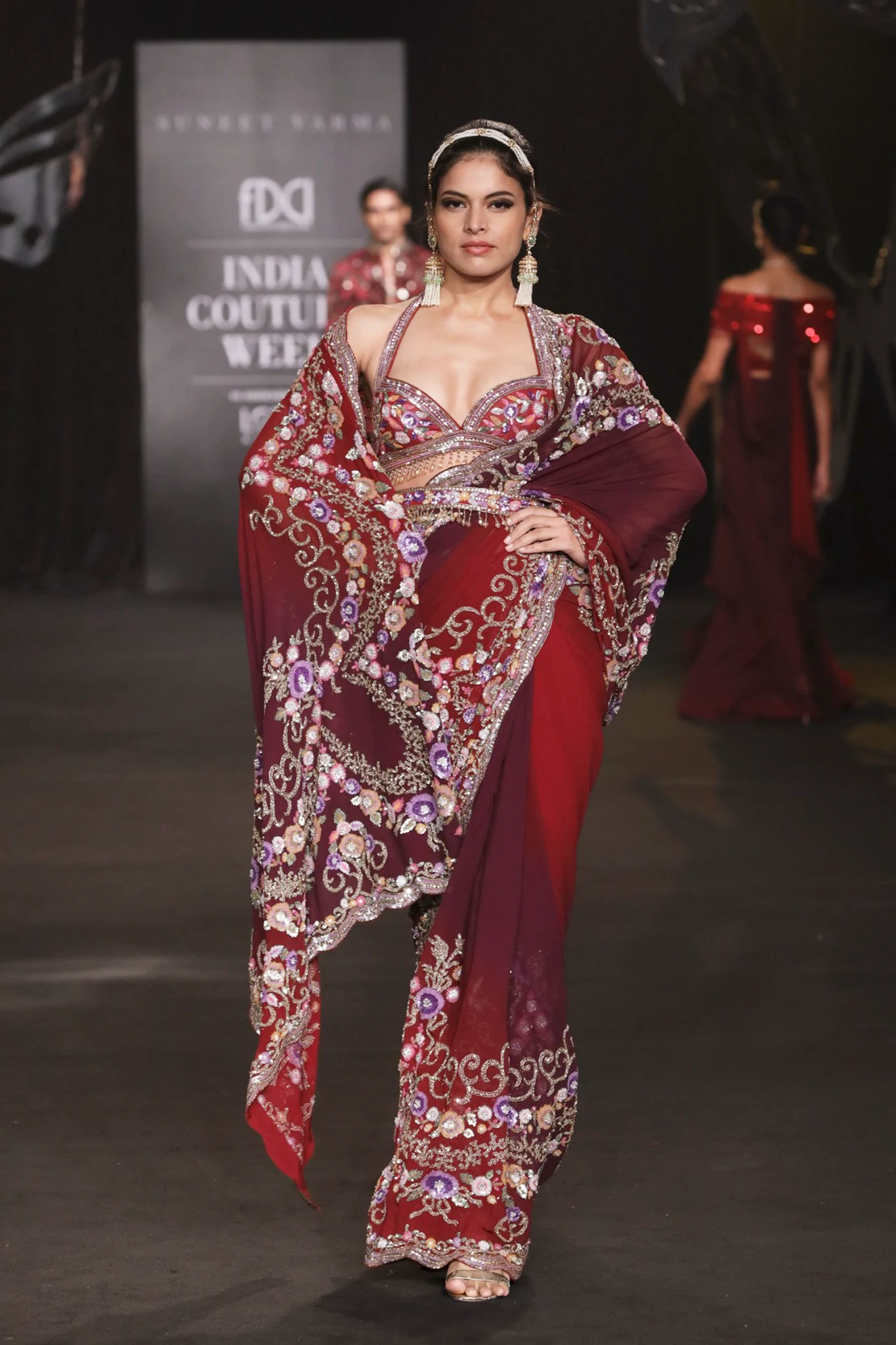
For eighteen editions, India Couture Week meant Delhi, full stop. The 2026 edition breaks that pattern, opening not in the capital but at a palace in Hyderabad — and treating that as a footnote would miss what's actually going on.
Fashion weeks are, underneath the spectacle, logistics exercises built around where the money and the media already are. Delhi made sense for that reason for nearly two decades. Choosing to open somewhere else this year isn't a scheduling quirk; it's an acknowledgment that couture's customer base has stopped being quite so Delhi-and-Mumbai-centric. Hyderabad, along with several other tier-one and tier-two cities, has built serious high-net-worth demand of its own over the past decade — a market couture houses would be foolish to keep treating as a satellite of the two traditional fashion capitals.
There's a timing logic here too that's easy to miss if you're not thinking about the industry as a supply chain. Couture week runs in July, months ahead of India's wedding season, which typically runs October through March. That gap isn't dead air — it's the industry's preview window, the point where the pieces that will actually sell get shown to press, stylists, and top-tier clients before production schedules lock in. Couture garments can take weeks of hand-embroidery and embellishment to complete; a July preview gives both the houses and their most serious clients the lead time that a ready-to-wear cycle simply doesn't need.
The lineup itself tells a similar story about where the industry sees its center of gravity. This year's edition mixes long-established couturiers with new entrants, while closing on a designer whose reputation now rests as much on his Paris Fashion Week presence as his domestic one. That closing slot isn't accidental either — it's the industry using its biggest annual platform to make a case, explicitly, that Indian couture's ceiling is no longer domestic recognition. It's international relevance, measured against Paris and Milan, not just Delhi and Mumbai.
None of this means Delhi's fashion primacy is ending — the week still returns there for its remaining shows. But a single symbolic decision, opening somewhere new after eighteen straight years, is exactly the kind of signal an industry sends when it's quietly repositioning itself for a bigger and more geographically distributed customer than the one it was built to serve.